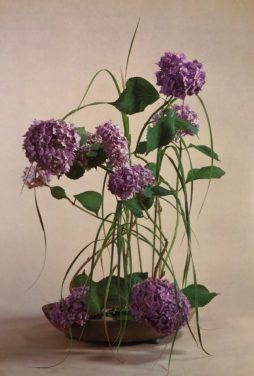
Ikebana Exhibitions
Ikebana, the traditional Japanese art of flower arrangement, is both an ancient and modern art. In basic form, an ikebana arrangement follows a fixed pattern: a triangle of three points representing heaven, earth, and man. Emphasis is placed on linear perfection, color harmony, space, and form. An ikebana usually contains the foliage and flowers of the current season, and all are used in their natural state except for the deft "cut" of the arranger's clippers which perfects the line of a branch or the shape of a bud.
- Find more information at Ikebana International
- Get involved with I.I.'s Portland Chapter
Sogetsu School of Ikebana Exhibition
June 6–7, 2009
Garden Pavilion
Free with Garden Admission

photo: MShades
The Sogetsu School was established in 1927. The founder, Sofu Teshigawara, broke away from tradition to establish a new school based on the belief that anyone can arrange ikebana anywhere, and with almost anything. The Sogetsu philosophy advocates that ikebana should be part of a lifestyle, appreciated by many people from all over the world, rather than being considered an exclusive aspect of Japanese culture to be enjoyed by a limited number of people. Just as people are different from each other, Sogetsu School encourages Ikebana students to be individual and imaginative.
Hana Matsuri, the Flower Festival
Celebrating the Birthday of Buddha

Jonathan Ley
In Japan, religious festivals are often connected with seasonal changes when people give thanks for the blessings of nature. Hana Matsuri both celebrates the fleeting beauty of the delicate cherry blossoms and honors the birth of Buddha, traditionally celebrated on April 8 in Japan. Those who visit a temple on his birthday take an offering of fresh spring flowers, and the festival has become known as Hana Matsuri, the Flower Festival.

